⏳ The Cosmic Timeline: From Big Bang to Today
🌌 Celestial Objects & Phenomena
📐 The Mathematics of the Cosmos
🖼️ Windows to the Universe
🔗 Explore Related Scientific Disciplines
🌌 What is Astrophysics? The Physics of the Cosmos
Astrophysics applies the laws of physics to understand astronomical objects and phenomena. From nuclear fusion powering stars to the extreme gravity around black holes, from the formation of galaxies to the expansion of the universe, astrophysics seeks to explain the cosmos using the language of physics. Cosmology, a branch of astrophysics, studies the universe as a whole—its origin, evolution, structure, and ultimate fate.
The Scale of the Universe
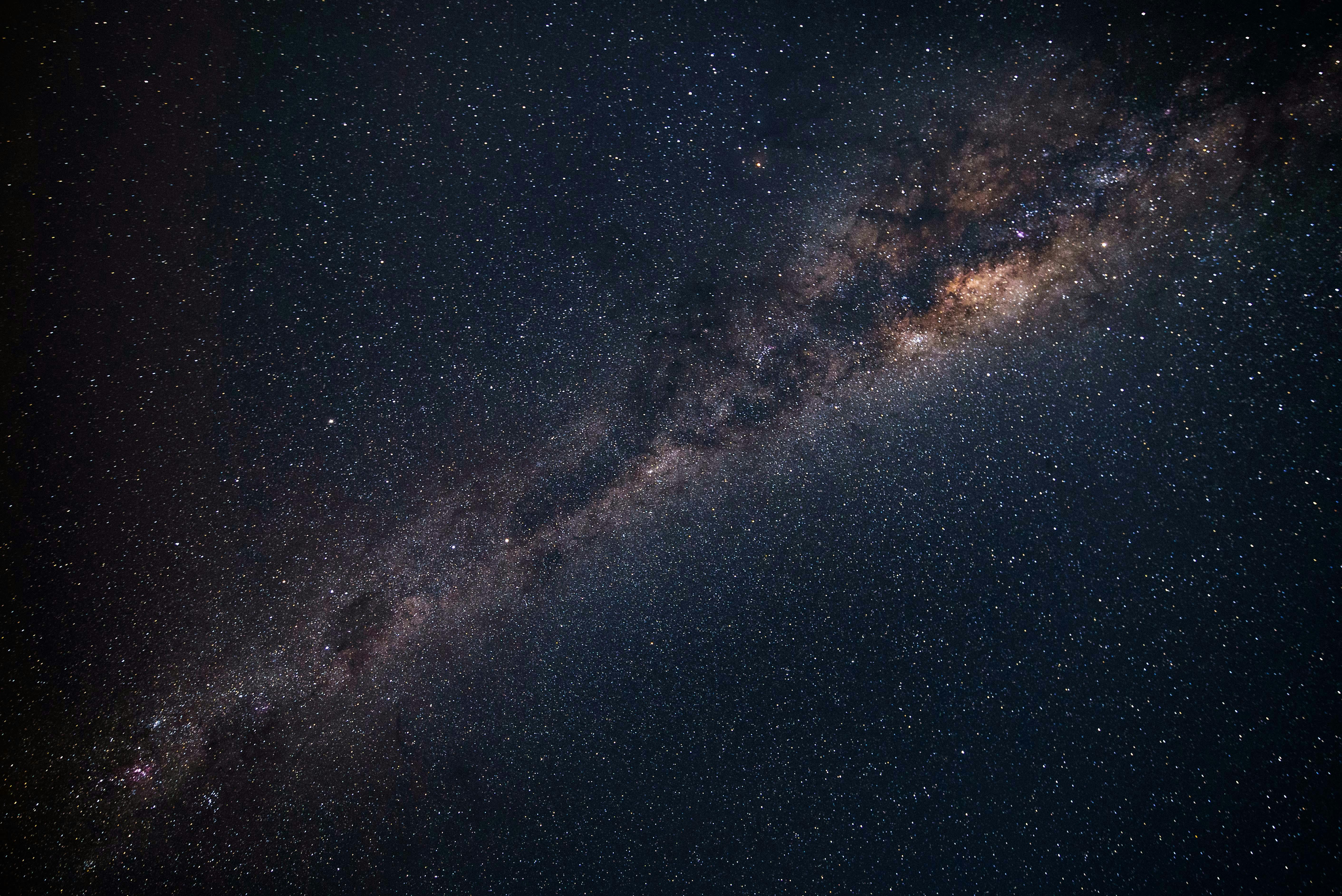
The universe spans an incomprehensible range of scales. Our planet orbits a star—one of 100 billion stars in the Milky Way galaxy, which is itself one of 2 trillion galaxies in the observable universe. Light from the most distant galaxies has traveled for over 13 billion years to reach us, allowing us to see the universe as it was shortly after the Big Bang. Understanding these vast scales requires not just telescopes, but the full power of modern physics.
⭐ Stellar Evolution: The Life Cycle of Stars
Stars are born, live, and die over millions to billions of years. Their evolution is driven by the balance between gravity (pulling inward) and nuclear fusion pressure (pushing outward).
Star Formation
Stars form in molecular clouds—dense regions of gas and dust. Gravitational collapse creates a protostar, which heats up until hydrogen fusion ignites. This marks the birth of a main-sequence star, where it spends most of its life fusing hydrogen into helium in its core.
Post-Main Sequence Evolution
When a star exhausts hydrogen in its core, it expands into a red giant. For stars like the Sun, the core collapses while outer layers expand, eventually shedding material to form a planetary nebula, leaving behind a white dwarf—a dense Earth-sized remnant that slowly cools over billions of years.
Massive Stars: Supernovae and Neutron Stars
Stars more than 8 times the Sun's mass have a dramatically different fate. They fuse heavier elements up to iron in their cores. When fusion stops, the core collapses in a fraction of a second, triggering a supernova explosion that can outshine an entire galaxy. The remnant becomes either a neutron star (a city-sized ball of nuclear matter) or, if the core exceeds about 3 solar masses, a black hole.
🕳️ Black Holes: Where Gravity Reigns Supreme
Black holes are regions of spacetime where gravity is so strong that nothing—not even light—can escape. Predicted by Einstein's general relativity, they represent the ultimate triumph of gravity over all other forces.
Types of Black Holes
- Stellar-Mass Black Holes: 3-100 solar masses, formed from collapsed massive stars
- Supermassive Black Holes: Millions to billions of solar masses, found at centers of galaxies (Sagittarius A* in our Milky Way, 4 million solar masses)
- Intermediate Black Holes: 100-100,000 solar masses, possibly formed from merging smaller black holes
Event Horizon and Singularity
The event horizon is the "point of no return"—once crossed, escape is impossible. Inside lies the singularity, where our understanding of physics breaks down, requiring a quantum theory of gravity. The Event Horizon Telescope captured the first image of a black hole's shadow in 2019, a monumental achievement in astrophysics.
Gravitational Waves
LIGO and Virgo observatories have detected gravitational waves from merging black holes and neutron stars, opening a new window on the universe. These ripples in spacetime confirm Einstein's predictions and allow us to study phenomena invisible to traditional telescopes.
🌌 Galaxies: Cosmic Cities of Stars
Galaxies are vast collections of stars, gas, dust, and dark matter bound by gravity. They come in three main types:
- Spiral Galaxies: Like our Milky Way, with elegant spiral arms containing young stars
- Elliptical Galaxies: Smooth, featureless, containing older stars
- Irregular Galaxies: Chaotic shapes, often distorted by gravitational interactions
Galaxies cluster into groups and superclusters, forming the cosmic web—the largest structure in the universe. The distribution of galaxies reveals the influence of dark matter, which provides the gravitational scaffolding for structure formation.
🌑 The Dark Universe: 95% of Everything
Everything we can see—stars, planets, galaxies, gas—makes up only about 5% of the universe. The rest is:
Dark Matter (27%)
Dark matter doesn't emit, absorb, or reflect light, but its gravitational influence is everywhere. It holds galaxies together, shapes the cosmic web, and determines the large-scale structure of the universe. Despite decades of searching, its particle nature remains one of the greatest mysteries in physics.
Dark Energy (68%)
Dark energy is even more mysterious—a repulsive force causing the expansion of the universe to accelerate. Discovered in 1998 through observations of distant supernovae (Nobel Prize 2011), dark energy challenges our understanding of fundamental physics. Its nature—whether a cosmological constant, a dynamic field, or something else entirely—is the central question of modern cosmology.
💥 The Big Bang: The Origin of Everything
The universe began about 13.8 billion years ago in an incredibly hot, dense state—the Big Bang. Evidence includes:
- Hubble Expansion: Galaxies are moving apart, showing the universe is expanding
- Cosmic Microwave Background (CMB): The afterglow of the Big Bang, detected in 1965 (Nobel Prize 1978)
- Primordial Abundances: Predictions of hydrogen and helium ratios match observations
- Large-Scale Structure: Distribution of galaxies matches growth from quantum fluctuations
Cosmic Inflation
The leading theory for the universe's earliest moments, inflation proposes that the universe underwent exponential expansion in the first 10⁻³² seconds. This explains why the universe appears flat, uniform, and structureless on large scales, while providing the seeds for galaxy formation from quantum fluctuations.
The Fate of the Universe
The ultimate fate depends on dark energy's nature. If dark energy is a cosmological constant, the universe will expand forever, growing colder and darker—the Heat Death. Alternative scenarios include the Big Crunch (collapse) or Big Rip (tearing apart of all structure). Current data favors eternal expansion.
🪐 Exoplanets: Worlds Beyond Our Solar System
Since the first discovery in 1995, over 5,000 exoplanets have been confirmed. The James Webb Space Telescope and future missions aim to characterize their atmospheres, searching for biosignatures—gases that might indicate life.
Key exoplanet discoveries:
- Hot Jupiters: Gas giants orbiting very close to their stars
- Super-Earths: Rocky planets larger than Earth, possibly habitable
- Earth-like Planets: Kepler-452b, TRAPPIST-1 system with multiple potentially habitable worlds
The question of whether we are alone in the universe is now being addressed scientifically—one of the most profound questions humanity has ever asked.
🔭 Tools of the Cosmic Trade
- James Webb Space Telescope (JWST): The most powerful space telescope, observing the first galaxies and exoplanet atmospheres
- Hubble Space Telescope: Iconic observatory that revolutionized astronomy
- Event Horizon Telescope: Global network imaging black holes
- LIGO/Virgo: Gravitational wave observatories
- Radio Telescopes: ALMA, FAST, VLA studying cold gas and cosmic phenomena
📚 How to Master Astrophysics and Cosmology
- Build Physics Foundations: Master mechanics, electromagnetism, and especially general relativity and quantum mechanics for advanced topics.
- Learn the Mathematics: Differential equations, tensors, and computational methods are essential tools.
- Follow Current Research: NASA, ESA, and observatories release discoveries regularly—stay updated.
- Use Simulation Tools: Programs like Universe Sandbox, CosmoMC, and Python libraries help visualize cosmic phenomena.
- Read Widely: From textbooks to popular science, multiple perspectives deepen understanding.