✈️ What is Aerospace Engineering?
Aerospace engineering is the branch of engineering that deals with the design, development, testing, and production of aircraft and spacecraft. It's divided into two main branches: aeronautical engineering (aircraft) and astronautical engineering (spacecraft).
• Aeronautical Engineering: Aircraft within Earth's atmosphere
• Astronautical Engineering: Spacecraft outside Earth's atmosphere

🛩️ Anatomy of an Aircraft
| Component | Function |
|---|---|
| Wings | Generate lift through pressure difference |
| Fuselage | Main body, holds passengers and cargo |
| Tail (Empennage) | Provides stability and control |
| Engines | Provide thrust for forward motion |
| Landing Gear | Wheels for takeoff, landing, taxi |
⚖️ The Four Forces of Flight
| Force | Direction | Description |
|---|---|---|
| Lift | Upward | Created by wings, overcomes weight |
| Weight | Downward | Force of gravity on the aircraft |
| Thrust | Forward | Produced by engines, overcomes drag |
| Drag | Backward | Air resistance, opposes motion |
🪽 Bernoulli's Principle & Lift Generation
Air moving over the curved top of a wing travels faster than air under the flat bottom. Faster-moving air has lower pressure. This pressure difference creates lift.
As velocity increases, pressure decreases
🚀 Propulsion: How Engines Work
| Engine Type | Principle | Applications |
|---|---|---|
| Jet Engine | Suck-compress-ignite-exhaust | Commercial aircraft, fighters |
| Propeller | Rotating wings create thrust | Small aircraft, turboprops |
| Rocket | Carries own oxidizer | Space launch, missiles |
# Rocket Thrust Equation
F = ṁ × v_e + (p_e - p_a) × A_e
F = thrust, ṁ = mass flow rate, v_e = exhaust velocity
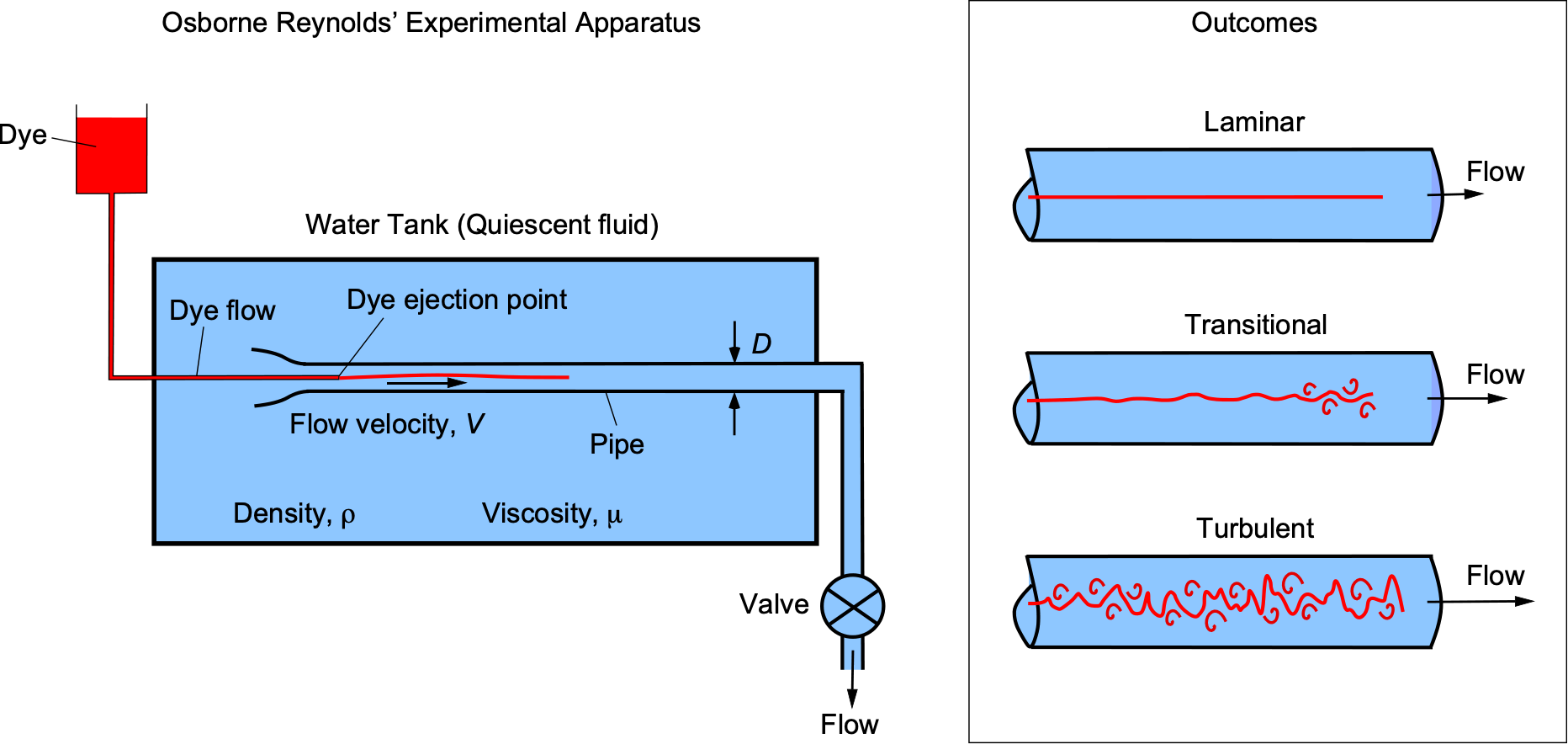
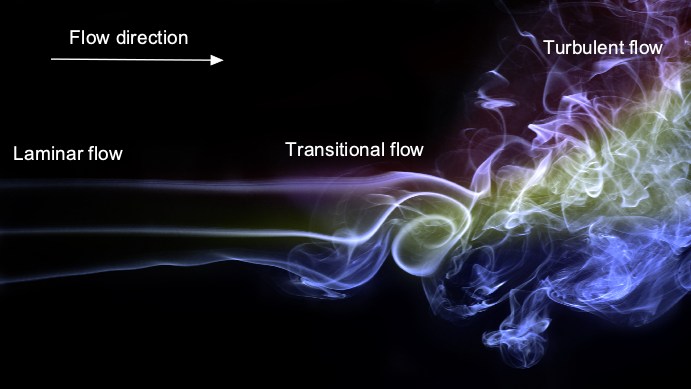
💧 Fluid Dynamics Fundamentals
| Flow Type | Description | Reynolds Number |
|---|---|---|
| Laminar Flow | Smooth, orderly layers | Re < 2000 |
| Turbulent Flow | Chaotic, mixing | Re > 4000 |
| Transitional | Mixed behavior | 2000 < Re < 4000 |
Reynolds Number determines flow regime
⚡ Supersonic & Hypersonic Flight
When aircraft exceed the speed of sound (Mach 1 ≈ 767 mph), they encounter unique phenomena:
- Shock Waves: Sudden pressure changes create sonic booms
- Wave Drag: Additional drag from shock wave formation
- Thermal Challenges: Hypersonic vehicles face extreme heating (2000°C+)
🛸 Orbital Mechanics: Getting to Space
Getting to space isn't about going up — it's about going fast enough sideways. Orbital velocity is 17,500 mph (28,000 km/h).
Orbital velocity = square root of (Gravitational constant × Earth mass / orbit radius)
- Low Earth Orbit (LEO): 160-2,000 km, 90 min orbit — ISS, satellites
- Geostationary (GEO): 35,786 km, 24 hr orbit — communications satellites
- Escape Velocity: 25,000 mph to leave Earth's gravity

🚀 Rocket Staging
Rockets use multiple stages to reach orbit efficiently. Each stage carries its own engines and propellant, then separates when empty.
| Stage | Function | Examples |
|---|---|---|
| Stage 1 | Initial ascent, largest engines | Falcon 9 first stage (reusable) |
| Stage 2 | Continues to orbit | Centaur, Falcon upper stage |
| Stage 3 (optional) | Orbit insertion | Saturn V third stage |
🔬 Materials in Aerospace
| Material | Properties | Applications |
|---|---|---|
| Aluminum Alloys | Lightweight, strong, corrosion-resistant | Airframe structures |
| Titanium Alloys | High strength-to-weight, heat-resistant | Engine components, SR-71 |
| Carbon Fiber | Extremely strong, lightweight | Wings, fuselage, rockets |
| Ceramic Composites | Heat-resistant | Thermal protection, nozzles |
🎓 Aerospace Engineering Careers
| Role | Typical Work | Salary Range |
|---|---|---|
| Aerodynamics Engineer | Design shapes for minimal drag | $85-135k |
| Propulsion Engineer | Design engines, combustion systems | $90-145k |
| Structures Engineer | Design lightweight airframes | $80-130k |
| Flight Test Engineer | Test and validate performance | $85-140k |
| Spacecraft Systems Engineer | Design satellites, space probes | $95-150k |