🔆 Branches of Optics
📡 Fiber Optics: The Backbone of Modern Communication
📐 The Mathematics of Light
🖼️ Visualizing Light
🔗 Explore Related Disciplines
🔆 What is Optics? The Science of Light
Optics is the branch of physics that studies the behavior and properties of light, including its interactions with matter. Photonics extends this to the generation, manipulation, and detection of light, enabling technologies from lasers to fiber optics. From ancient lenses to quantum communication, optics has transformed our understanding of the universe and our ability to manipulate it.
The Dual Nature of Light
Light exhibits both wave and particle properties—a duality central to quantum mechanics. As a wave, light shows interference, diffraction, and polarization. As particles (photons), it carries energy and momentum, enabling phenomena like the photoelectric effect and quantum entanglement. This duality is foundational to modern physics and technology.
📐 Geometrical Optics: The Ray Model
Geometrical optics treats light as rays traveling in straight lines. This approximation is valid when structures are much larger than the wavelength of light. Key principles include:
- Reflection: Angle of incidence equals angle of reflection; law of reflection.
- Refraction: Light bends when passing between media; Snell's law governs direction change.
- Total Internal Reflection: When light attempts to move from higher to lower refractive index beyond the critical angle, it reflects completely—the principle behind fiber optics.
- Lens Equation: 1/f = 1/d₀ + 1/dᵢ relates focal length, object distance, and image distance.
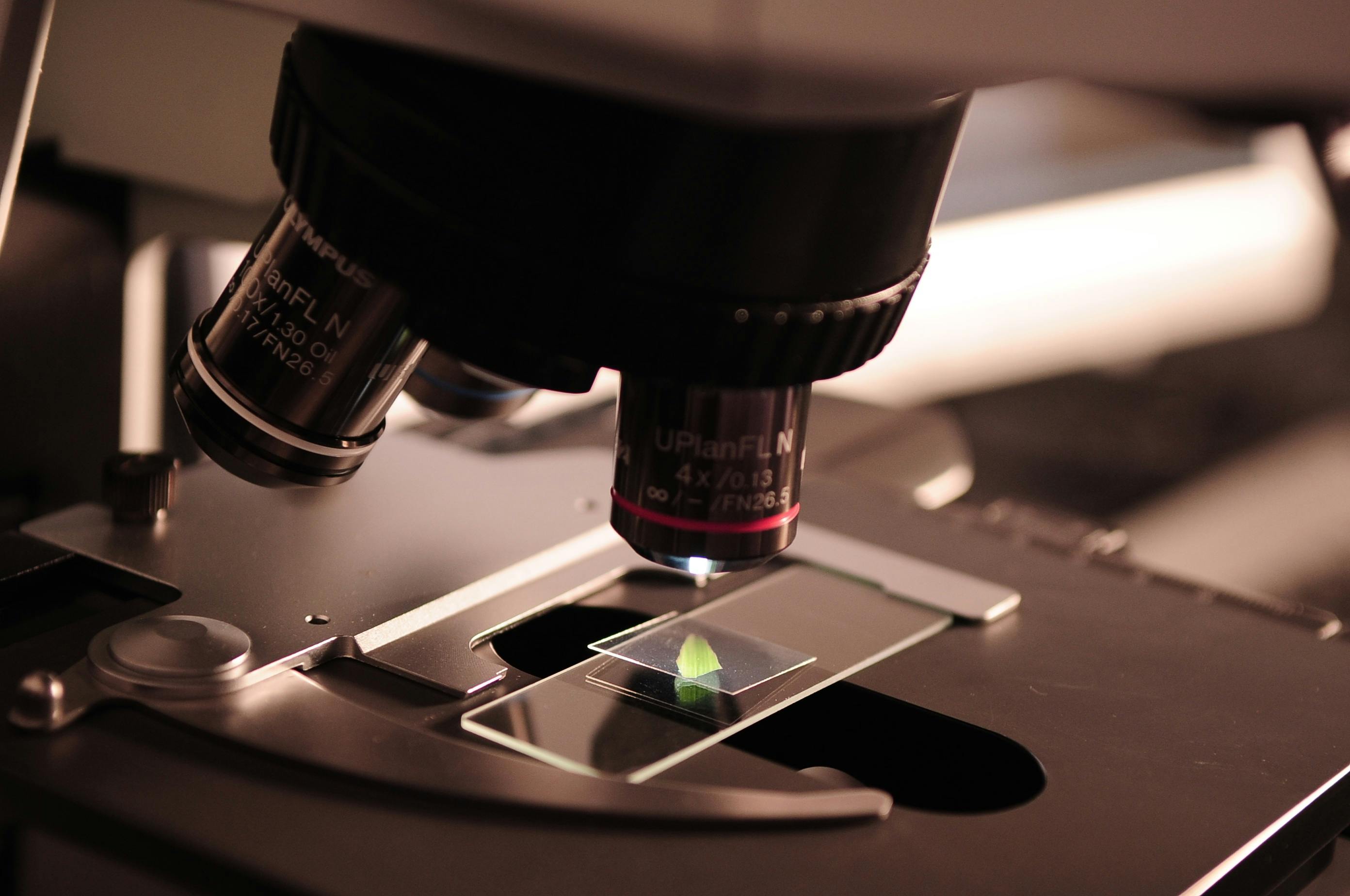
Optical instruments—microscopes, telescopes, cameras, eyeglasses—are designed using these principles, with aberration correction enabling high-resolution imaging.
🌊 Wave Optics: Interference, Diffraction, Polarization
When light interacts with structures comparable to its wavelength, wave effects dominate. Key phenomena include:
- Interference: Superposition of waves creates constructive (bright) and destructive (dark) patterns. Young's double-slit experiment demonstrated light's wave nature.
- Diffraction: Bending of waves around obstacles. Diffraction gratings separate light into spectra, enabling precise wavelength measurement.
- Polarization: Light waves oscillate in specific directions. Polarizers, liquid crystals, and birefringent materials enable LCD displays, 3D cinema, and stress analysis.
These effects set the resolution limit of optical systems: the Rayleigh criterion defines the smallest resolvable detail, proportional to λ/(numerical aperture).
🔦 Lasers: Coherent Light
LASER stands for Light Amplification by Stimulated Emission of Radiation. Laser light is coherent (in phase), monochromatic (single wavelength), and highly directional. Key components:
- Gain Medium: Gas, solid-state, semiconductor, or dye that amplifies light
- Pumping Source: Electrical discharge, flashlamp, or another laser to excite the gain medium
- Optical Cavity: Mirrors that reflect light back and forth, building up intensity
Applications include:
- Medicine: LASIK surgery, dermatology, cancer treatment
- Manufacturing: Cutting, welding, marking, 3D printing
- Communication: Fiber optics, free-space optical links
- Science: Spectroscopy, LIGO gravitational wave detection, cooling atoms
📡 Fiber Optics: Light at the Speed of Data
Optical fibers guide light over long distances with minimal loss. Total internal reflection confines light to the core. Key parameters:
- Attenuation: Loss per kilometer; modern fibers achieve <0.2 dB/km at 1550 nm
- Dispersion: Pulse spreading limits data rate; dispersion-compensating fibers mitigate
- Wavelength Division Multiplexing (WDM): Transmitting multiple wavelengths simultaneously, enabling terabit-per-second data rates
Undersea cables span oceans, carrying 99% of intercontinental internet traffic. Fiber optics also enable medical endoscopes, sensors, and high-power laser delivery.
⚛️ Quantum Optics: Light at the Quantum Level
Quantum optics explores the quantum nature of light, including phenomena where classical descriptions fail:
- Single Photons: Light quantized into indivisible particles; sources like quantum dots, spontaneous parametric down-conversion
- Entanglement: Pairs of photons with correlated quantum states, enabling quantum teleportation and quantum cryptography
- Photon Squeezing: Reducing quantum noise below the standard quantum limit for enhanced measurement sensitivity
- Quantum Communication: Unbreakable encryption via quantum key distribution (QKD), already deployed in fiber networks and satellite links (Micius satellite)
Quantum optics is the foundation of emerging quantum technologies, including quantum computers, quantum networks, and ultra-precise sensors.
💡 Modern Photonics: Integrated Light
Photonics integrates optical components on chips, analogous to electronic integrated circuits. Silicon photonics enables:
- High-Speed Data Communication: Optical transceivers for data centers and supercomputers
- LiDAR: 3D sensing for autonomous vehicles, robotics, mapping
- Optical Computing: Photonic processors for AI acceleration, neuromorphic computing
- Biophotonics: Medical imaging, flow cytometry, optogenetics for neuroscience
📚 How to Master Optics and Photonics
- Master Geometrical Optics First: Ray tracing, lens formulas, and optical instruments build intuition for how light behaves.
- Understand Wave Phenomena: Interference, diffraction, and polarization are essential for understanding resolution, spectroscopy, and advanced techniques.
- Learn the Math: Fourier optics, Maxwell's equations, and wave equations provide the mathematical foundation.
- Hands-on Experience: Work with lasers, fiber optics, and optical components in a lab setting.
- Connect to Applications: Understanding real-world applications—from microscopy to quantum communication—makes the theory tangible.