
🔬 What is Chemical Process Engineering?
Chemical process engineering transforms raw materials into valuable products through chemical, physical, and biological processes. It combines chemistry, physics, biology, mathematics, and economics to design, operate, and optimize industrial processes that produce everything from fuels and plastics to pharmaceuticals and food.

📐 Core Principles of Chemical Engineering
| Principle | Description | Application |
|---|---|---|
| Material Balances | Conservation of mass | Input = Output + Accumulation |
| Energy Balances | Conservation of energy | Heat transfer, work, enthalpy |
| Thermodynamics | Phase equilibrium, energy conversion | Distillation, reactors |
| Transport Phenomena | Momentum, heat, mass transfer | Fluid flow, heat exchangers |
| Reaction Kinetics | Reaction rates, mechanisms | Chemical reactors |
⚡ Reaction Kinetics & Reactor Design
Reaction kinetics studies how fast chemical reactions occur and the factors that influence reaction rates — temperature, pressure, concentration, and catalysts.
Rate constant k = A·e^(-Ea/RT) (Arrhenius Equation)
| Reactor Type | Description | Application |
|---|---|---|
| Batch Reactor | All reactants added at once | Pharmaceuticals, specialty chemicals |
| CSTR | Continuous stirred tank | Liquid phase reactions, steady production |
| PFR | Plug flow reactor | Gas phase, high throughput |
🔥 Chemical Thermodynamics
Thermodynamics governs energy transformations, phase equilibria, and the direction of chemical processes. Key concepts include enthalpy, entropy, Gibbs free energy, and phase equilibrium.
Reaction spontaneous when ΔG < 0 | Phase equilibrium when chemical potentials equal
🧪 Separation Processes
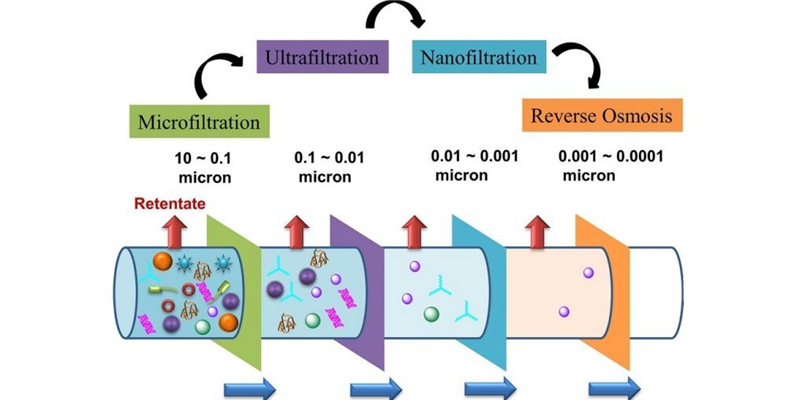
Separation processes isolate desired products from mixtures — critical for product purity and efficiency.
| Process | Principle | Application |
|---|---|---|
| Distillation | Vapor-liquid equilibrium | Crude oil refining, alcohol purification |
| Absorption | Gas solubility in liquid | CO₂ removal, acid gas treatment |
| Adsorption | Surface attraction | Water purification, air separation |
| Membrane | Selective permeation | Water desalination, gas separation |
| Crystallization | Solid formation | Sugar, salt, pharmaceutical production |
📋 Process Design & Flow Sheets
Process design converts laboratory concepts into industrial-scale operations. Engineers create process flow diagrams (PFDs) and piping and instrumentation diagrams (P&IDs) that map every piece of equipment, stream, and control system.
# Process Flow Diagram (PFD) Elements:
1. Raw materials → Reactor → Separation → Purification → Product
2. Utilities: Steam, cooling water, electricity, compressed air
3. Recycle streams: Unreacted materials returned to reactor
4. Waste treatment: Environmental compliance
🌡️ Heat Transfer in Chemical Processes
Heat exchangers transfer energy between streams, maintaining reactor temperatures and recovering waste heat.
Q = heat transferred, U = overall heat transfer coefficient, A = area, ΔT_lm = log mean temperature difference
| Heat Exchanger Type | Features | Application |
|---|---|---|
| Shell & Tube | Robust, high pressure | Chemical plants, refineries |
| Plate & Frame | Compact, efficient | Food, pharmaceutical |
| Air Cooled | No cooling water | Remote locations |
🎛️ Process Control & Instrumentation
Control systems maintain safe, stable operation through feedback loops. PID (proportional-integral-derivative) controllers adjust valves, pumps, and heaters to maintain setpoints.
# PID Controller Equation
u(t) = Kp·e(t) + Ki·∫e(t)dt + Kd·de(t)/dt
where e(t) = setpoint - measured value
- Distributed Control Systems (DCS): Centralized plant control
- Programmable Logic Controllers (PLC): Discrete automation
- Safety Instrumented Systems (SIS): Emergency shutdown
🛡️ Process Safety & Environmental Protection
Chemical plants handle hazardous materials — safety is paramount. Key safety principles:
- Inherent Safety: Design out hazards
- Hazard and Operability (HAZOP): Systematic hazard identification
- Layer of Protection Analysis (LOPA): Quantify risk reduction
- Process Safety Management (PSM): OSHA regulations
🏭 Major Chemical Industries
| Industry | Products | Key Processes |
|---|---|---|
| Petrochemicals | Plastics, fuels, solvents | Cracking, reforming, distillation |
| Pharmaceuticals | Drugs, vaccines | Synthesis, crystallization, drying |
| Food & Beverage | Processed foods, beverages | Fermentation, pasteurization, extraction |
| Fertilizers | Ammonia, urea, phosphates | Haber process, oxidation |
| Specialty Chemicals | Coatings, adhesives, cosmetics | Batch processing, blending |
🎓 Chemical Engineering Careers
| Role | Typical Work | Salary Range |
|---|---|---|
| Process Engineer | Plant operations, optimization | $70-110k |
| Design Engineer | Process design, equipment specification | $80-120k |
| Project Engineer | Capital projects, construction | $85-130k |
| R&D Engineer | New processes, scale-up | $80-115k |
| Safety Engineer | Process safety, risk analysis | $85-125k |