🖼️ The Dynamic Atmosphere
🔗 Explore Related Disciplines
🌬️ The Atmosphere: Earth's Gaseous Envelope
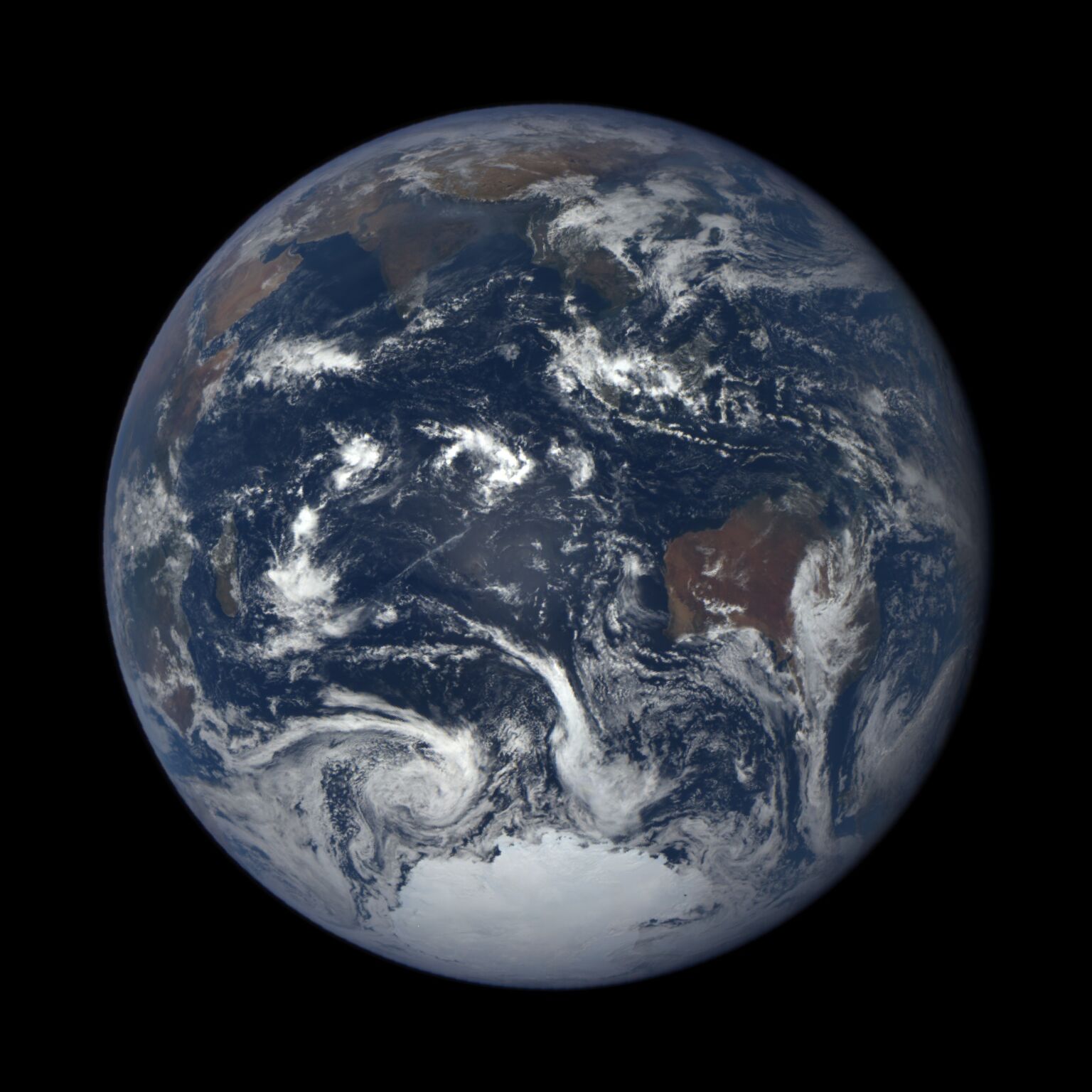
Earth's atmosphere is a thin veil of gases that makes life possible. Composed primarily of nitrogen (78%), oxygen (21%), and trace gases (argon, carbon dioxide, water vapor), the atmosphere provides oxygen for respiration, protects us from harmful solar radiation, and regulates surface temperature through the greenhouse effect. Extending from the surface to over 600 kilometers, the atmosphere is layered by temperature: troposphere (weather), stratosphere (ozone layer), mesosphere, and thermosphere (auroras).
🌡️ The Greenhouse Effect: Natural and Enhanced
Greenhouse gases—water vapor, carbon dioxide, methane, nitrous oxide—trap heat in the atmosphere, maintaining Earth's average temperature at a livable 15°C rather than -18°C. This natural greenhouse effect is essential for life. Human activities, primarily burning fossil fuels and deforestation, have increased greenhouse gas concentrations, enhancing the greenhouse effect and driving global warming. Understanding this process is fundamental to climate science.
🌪️ Atmospheric Circulation: The Global Heat Engine
Uneven solar heating—intense at the equator, weak at the poles—drives atmospheric circulation. Warm air rises at the equator, creating low pressure and rainfall. This air moves poleward, cools, and sinks at about 30° latitude, creating subtropical high-pressure zones and deserts. This circulation forms the Hadley cells. Additional circulation cells (Ferrel cells, polar cells) complete the global pattern. The result is Earth's major wind belts: trade winds, westerlies, and polar easterlies.
🌊 Jet Streams: Rivers of Air
Jet streams are narrow bands of strong wind in the upper troposphere, driven by temperature contrasts between air masses. The polar jet stream separates cold Arctic air from warmer mid-latitude air. Its position and strength influence storm tracks, temperature patterns, and weather systems. Climate change may be affecting jet stream behavior, with implications for extreme weather.
🌍 El Niño and La Niña
The El Niño-Southern Oscillation (ENSO) is the most influential natural climate pattern on Earth. El Niño (warm phase) features warmer-than-average Pacific waters, shifting rainfall patterns globally. La Niña (cool phase) brings opposite effects. ENSO affects hurricane activity, monsoon intensity, drought patterns, and global temperatures. Understanding ENSO is essential for seasonal forecasting.
☁️ Clouds: The Art of the Sky
Clouds form when rising air cools, causing water vapor to condense onto tiny particles (cloud condensation nuclei). Cloud classification—based on height and appearance—helps meteorologists understand atmospheric processes.
Cloud Types and Weather
High clouds (cirrus, cirrostratus) often precede weather changes. Middle clouds (altocumulus, altostratus) may indicate approaching storms. Low clouds (stratus, stratocumulus) bring overcast conditions. Vertical clouds (cumulus, cumulonimbus) develop from fair-weather cumulus to towering thunderstorms. Cumulonimbus clouds produce lightning, heavy rain, hail, and tornadoes.
☔ Precipitation Processes
Precipitation forms when cloud droplets grow large enough to fall. Collision-coalescence produces rain in warm clouds. The Bergeron process—ice crystals growing at expense of supercooled water—produces rain and snow in cold clouds. Precipitation types include rain, snow, sleet, freezing rain, and hail. Hail forms in strong thunderstorms with strong updrafts that carry ice through freezing layers repeatedly.
🌀 Severe Weather: Nature's Fury
Severe weather events cause significant damage and loss of life. Understanding their formation improves forecasting and warning.
Thunderstorms
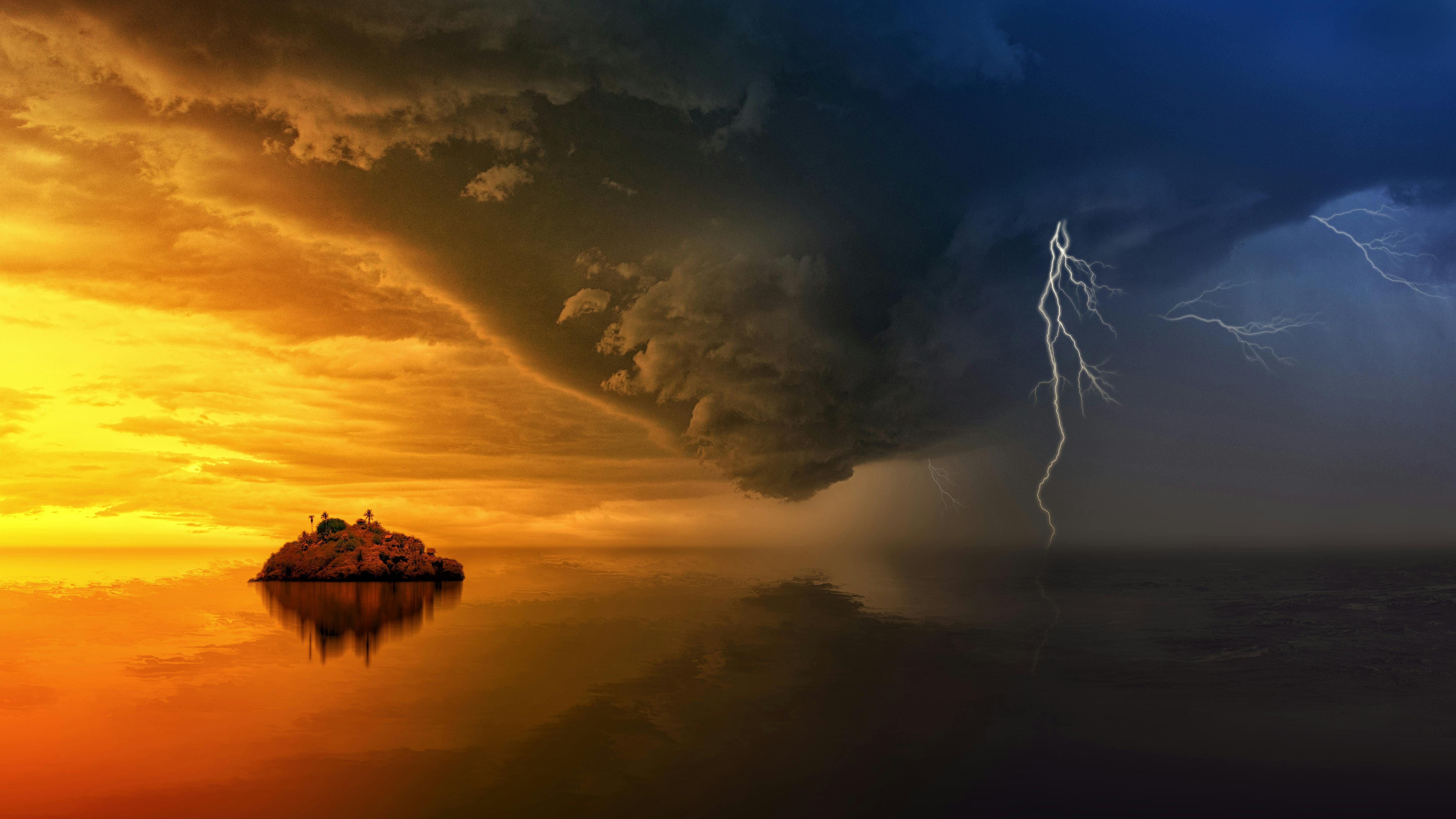
Thunderstorms require three ingredients: moisture, instability (warm air near surface, cold aloft), and lift (fronts, topography). Single-cell storms produce brief heavy rain. Multicell clusters can persist for hours. Supercells—rotating thunderstorms—are the most dangerous, producing large hail, damaging winds, and tornadoes.
Tornadoes
Tornadoes are violently rotating columns of air extending from thunderstorms to the ground. The United States experiences over 1,000 tornadoes annually (Tornado Alley). Intensity is rated by the Enhanced Fujita Scale (EF0-EF5). Doppler radar and spotter networks improve warning times, but tornado formation remains incompletely understood.
Hurricanes (Tropical Cyclones)
Hurricanes are enormous rotating storms that form over warm ocean waters (>26°C). They require warm water, atmospheric instability, and weak wind shear. Hurricanes are categorized by the Saffir-Simpson Scale (Category 1-5). Storm surge—water pushed ashore—causes most hurricane deaths. Climate change may increase hurricane intensity, though frequency changes remain uncertain.
📡 Weather Forecasting: Predicting the Unpredictable
Weather forecasting has advanced dramatically through observations, numerical models, and computing power.
Observations
Weather data comes from weather stations, weather balloons (radiosondes), radar, satellites, and aircraft. The global observing system provides millions of daily observations. Weather radar (Doppler) measures precipitation intensity and velocity, crucial for severe weather warnings. Satellites provide continuous coverage of clouds, storms, and atmospheric conditions.
Numerical Weather Prediction (NWP)
NWP models solve equations of atmospheric physics on three-dimensional grids. Global models cover Earth; regional models provide higher resolution. Ensemble forecasting runs multiple models or initial conditions to quantify uncertainty. Forecast skill has improved steadily—a 5-day forecast today is as accurate as a 2-day forecast 30 years ago.
Challenges and Frontiers
Forecasting remains challenging for specific phenomena (tornadoes, intensity of landfalling hurricanes) and beyond 10 days. Machine learning and AI are being applied to weather prediction. Improved observations, higher-resolution models, and better understanding of physical processes continue to advance forecasting.
🧪 Atmospheric Chemistry and Air Quality
The atmosphere's chemical composition affects climate, human health, and ecosystems.
Ozone Layer and Depletion
Stratospheric ozone absorbs harmful ultraviolet radiation. Chlorofluorocarbons (CFCs) caused ozone depletion, creating the Antarctic ozone hole. The Montreal Protocol (1987) phased out CFCs, and the ozone layer is slowly recovering—a rare environmental success story.
Air Pollution
Air pollutants—particulate matter, nitrogen oxides, sulfur dioxide, ozone, carbon monoxide—affect human health and the environment. Major sources include fossil fuel combustion, industry, and agriculture. Air quality forecasting helps protect vulnerable populations. Reducing air pollution also benefits climate (many pollutants are also climate forcers).
Atmospheric Aerosols
Aerosols—tiny particles suspended in the atmosphere—affect climate directly (scattering/absorbing radiation) and indirectly (cloud formation). Sources include sea spray, desert dust, volcanic eruptions, and human activities. Aerosol effects are a major uncertainty in climate projections.
🌍 Climate vs. Weather: What's the Difference?
Weather describes short-term atmospheric conditions—temperature, precipitation, wind—over hours to days. Climate describes long-term averages and variability over decades to centuries. Climate change refers to shifts in long-term statistics, not individual weather events. Distinguishing between weather and climate is essential for understanding climate change and its impacts.
🛰️ Observing the Atmosphere: Technology and Innovation
Modern atmospheric science relies on advanced observing systems.
Weather Satellites
Geostationary satellites (GOES, Himawari) provide continuous imagery of clouds and storms. Polar-orbiting satellites (JPSS, MetOp) provide global coverage and vertical profiles. Satellites measure temperature, moisture, winds, precipitation, and atmospheric composition.
Radar Networks
Doppler radar networks (NEXRAD in the US) provide detailed precipitation and wind information. Dual-polarization radar improves discrimination of precipitation type. Phased-array radar offers faster scanning capabilities.
New Technologies
Autonomous aircraft, drones, and high-altitude balloons provide targeted observations. Citizen science networks supplement official observations. Machine learning is being used to improve satellite retrievals and model parameterizations.
📚 How to Master Meteorology and Atmospheric Science
- Understand Physics Fundamentals: Thermodynamics, fluid dynamics, and radiative transfer are essential for understanding atmospheric processes.
- Learn Synoptic Meteorology: Study weather maps, fronts, pressure systems, and how they produce weather.
- Practice Forecasting: Regular weather forecasting practice builds intuition for atmospheric behavior.
- Follow Model Outputs: Learn to interpret numerical weather prediction models and their biases.
- Engage with Real-Time Data: Explore data from weather satellites, radar, and surface observations.
- Stay Current with Research: Follow journals like Monthly Weather Review, Journal of Climate, and organizations like NOAA, ECMWF, and AMS.