Chapter One: What Are Translation and Interpretation?
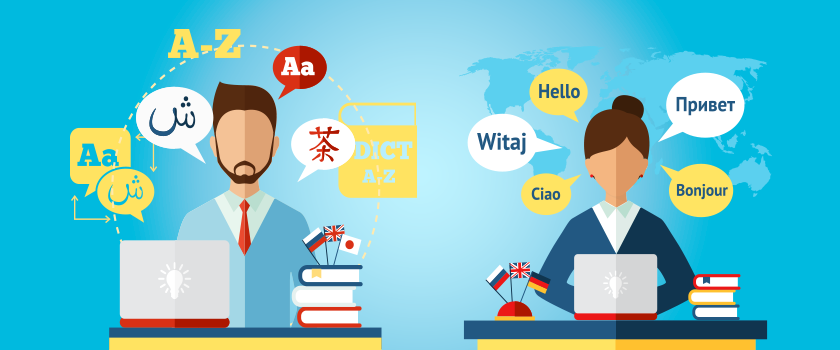
Translation and interpretation are the essential bridges that connect languages, cultures, and peoples across the globe. While often used interchangeably in casual conversation, these two disciplines represent distinct professional practices with different skill sets, methodologies, and contexts of application. Both, however, share a common mission: to convey meaning faithfully from one language to another, preserving intent, tone, nuance, and cultural context.
Translation refers to the written conversion of text from a source language to a target language. Translators work with documents, books, websites, software, and any form of written communication. They have the luxury of time, access to reference materials, and the ability to revise and refine their work. The result is a permanent, polished product that can be reviewed, edited, and perfected before reaching the audience.
Interpretation, by contrast, deals with spoken language. Interpreters work in real-time, converting speech from one language to another instantaneously. They operate in settings such as conferences, courtrooms, hospitals, and diplomatic meetings. The interpreter must process what is said, comprehend its meaning, and produce an equivalent expression in the target language—all within seconds. This demands exceptional cognitive agility, concentration, and linguistic mastery.
Chapter Two: A Brief History of Translation
The history of translation is as old as written language itself. Whenever two cultures with different languages came into contact, someone was needed to bridge the gap. The earliest known translations date back to ancient Mesopotamia, where Sumerian texts were translated into Akkadian around 2000 BCE. The Rosetta Stone, carved in 196 BCE, features the same text in Egyptian hieroglyphs, Demotic script, and ancient Greek—a trilingual translation that eventually enabled scholars to decipher Egyptian writing.
Throughout antiquity, translation played a crucial role in the transmission of knowledge. Greek philosophical works were translated into Arabic during the Abbasid Caliphate's Golden Age (8th-13th centuries), preserving and expanding upon classical wisdom. Later, these Arabic versions were translated into Latin, sparking the European Renaissance. The translation of religious texts—the Septuagint (Hebrew Bible into Greek), St. Jerome's Vulgate (Bible into Latin), and Martin Luther's German Bible—profoundly shaped religious, cultural, and linguistic development across continents.
The modern era of translation began with the professionalization of the field in the 20th century. International organizations like the United Nations and the European Union created vast translation services. Advances in linguistics gave rise to translation theory, and scholars like Eugene Nida, Peter Newmark, and Umberto Eco explored the philosophical and practical dimensions of converting meaning across languages.
Chapter Three: Types of Translation
Translation is not a monolithic profession. Translators specialize in specific domains, each with its own conventions, terminology, and challenges.
Literary Translation
Perhaps the most celebrated form of translation, literary translation involves rendering novels, poetry, plays, and other creative works into another language. The literary translator must capture not only meaning but also style, voice, rhythm, and the ineffable qualities that make literature art. Literary translation requires creativity, deep cultural knowledge, and often collaboration with the original author. Great literary translations—such as Constance Garnett's Dostoevsky, Gregory Rabassa's García Márquez, or Edith Grossman's Cervantes—become classics in their own right.
Technical Translation
Technical translation covers user manuals, engineering documents, scientific papers, and software documentation. Precision is paramount; a single mistranslated term could lead to safety hazards or equipment failure. Technical translators must understand the subject matter deeply and maintain consistent terminology across large projects.
Legal Translation
Contracts, patents, court documents, and legislation require specialized legal translation. The translator must navigate complex legal systems, understand the binding implications of language, and ensure that the translated document carries the same legal weight as the original. Mistakes in legal translation can have serious consequences, including financial loss or invalidated agreements.
Medical Translation
Clinical trial documents, patient records, pharmaceutical labeling, and medical device instructions demand absolute accuracy. Medical translators work with highly specialized terminology and must understand regulatory requirements across different countries. A single error could affect patient safety or drug approval.
Financial Translation
Annual reports, financial statements, investment prospectuses, and banking documents require precision and confidentiality. Financial translators must understand complex accounting principles and maintain absolute consistency in terminology.
Chapter Four: Types of Interpretation
Interpretation is divided into several modes, each suited to different contexts and requiring distinct skills.
Simultaneous Interpretation
In simultaneous interpretation, the interpreter renders the speaker's words into another language in real-time, with only a few seconds' delay. This mode is used in international conferences, the United Nations, and large multilingual events. Interpreters work from soundproof booths, listening through headphones and speaking into microphones. Audience members select the language channel they need. Simultaneous interpretation demands extraordinary concentration; interpreters typically work in teams of two or three, rotating every 20-30 minutes to prevent mental fatigue.
Consecutive Interpretation
In consecutive interpretation, the interpreter waits for the speaker to finish a segment (often several sentences or a paragraph) before rendering the message in the target language. The interpreter takes notes using a specialized system that captures ideas, numbers, and proper names rather than words. This mode is common in diplomatic meetings, courtrooms, medical consultations, and small-group settings. Consecutive interpretation allows for greater accuracy and nuance but doubles the time required for communication.
Whispered Interpretation (Chuchotage)
In whispered interpretation, the interpreter sits next to a small group of listeners and whispers the translation while the speaker continues. This mode is used when only one or two participants need interpretation, such as in business meetings or site visits.
Relay Interpretation
When multiple languages are involved, interpreters may work in relay mode. A speaker uses one language, an interpreter renders it into a common language (often English or French), and then other interpreters translate from that common language into their respective target languages. This ensures efficient communication in multilingual settings with dozens of language combinations.
Chapter Five: The Translation Process
Professional translation follows a rigorous process that ensures quality and accuracy. The process typically includes several stages:
1. Analysis and Comprehension
The translator reads the source text thoroughly, identifying its purpose, audience, and nuances. This stage involves researching terminology, understanding cultural references, and clarifying any ambiguities with the client or author. Full comprehension of the source text is essential before any translation begins.
2. Transfer (Draft Translation)
The translator produces a first draft, focusing on conveying meaning accurately while maintaining the style and tone of the original. This stage requires balancing fidelity to the source with natural expression in the target language. The translator makes choices about word selection, sentence structure, and cultural adaptation.
3. Revision and Self-Editing
The translator reviews the draft, comparing it against the source text to ensure accuracy and completeness. This stage involves refining language, checking consistency of terminology, and polishing the final product. Professional translators typically set their work aside for a period before revision to approach it with fresh eyes.
4. Review and Quality Assurance
For important projects, a second translator or editor reviews the work. This quality assurance step catches errors that the original translator may have missed and ensures that the translation meets industry standards. Some projects also undergo proofreading and formatting checks.
Chapter Six: Translation Theory and Key Concepts
Over centuries, scholars and practitioners have developed theoretical frameworks for understanding translation. These concepts guide translators in making informed decisions.
Formal Equivalence vs. Dynamic Equivalence
Eugene Nida distinguished between formal equivalence (staying as close as possible to the form and structure of the source text) and dynamic equivalence (seeking to produce the same effect on the target audience as the original had on its audience). The choice depends on the text type, purpose, and audience. Legal documents often require formal equivalence, while marketing materials prioritize dynamic equivalence.
Domestication vs. Foreignization
Domestication adapts the text to the target culture, making it feel familiar and natural. Foreignization preserves elements of the source culture, allowing readers to encounter the "otherness" of the original. Translators of literature must navigate this tension, deciding whether to make Dante sound like an English poet or allow his Italianness to remain visible.
Untranslatability
Some concepts resist translation. Cultural-specific items, wordplay, puns, and poetic forms may have no equivalent in the target language. Translators must find creative solutions—adaptation, explanation, compensation, or omission—while acknowledging that something is always lost and something gained in every translation.
Translation Approaches Compared
| Approach | Focus | Best For |
|---|---|---|
| Literal Translation | Word-for-word accuracy | Legal, technical documents |
| Communicative Translation | Reader comprehension | News, instructions, marketing |
| Literary Translation | Style, voice, aesthetics | Fiction, poetry, drama |
| Adaptation | Cultural localization | Marketing, software, websites |
Chapter Seven: Technology and the Future of Translation
Technology has profoundly transformed the translation industry. Computer-assisted translation (CAT) tools help translators work more efficiently by storing translated segments in translation memories, ensuring consistency across large projects. Terminology databases maintain approved vocabulary. Machine translation (MT), powered by artificial intelligence and neural networks, has advanced dramatically, producing increasingly accurate raw translations.
Machine Translation and Post-Editing
Neural machine translation (NMT) systems like Google Translate, DeepL, and Microsoft Translator use deep learning to produce fluent translations. While not yet replacing human translators for most professional work, MT serves as a valuable tool for initial drafts, which human translators then post-edit. This combination of human expertise and machine efficiency is becoming standard in many translation workflows.
Localization and Internationalization
Beyond text translation, localization adapts products, software, and websites for specific markets. This includes adjusting date formats, currencies, cultural references, and user interfaces. Internationalization is the process of designing products to be easily adapted to different languages and cultures from the outset.
Remote Interpretation Platforms
The COVID-19 pandemic accelerated the adoption of remote interpretation platforms. Interpreters now work from home or remote hubs, connecting to meetings via specialized software that provides audio channels, video feeds, and technical support. This shift has expanded access to interpretation services and created new possibilities for multilingual communication.
Chapter Eight: Becoming a Professional Translator or Interpreter
A career in translation or interpretation requires more than bilingualism. Professional practitioners develop specialized skills through education, training, and experience.
Essential Skills
- Native or near-native proficiency in both source and target languages
- Excellent writing skills (for translators) or speaking skills (for interpreters)
- Subject matter expertise in one or more specialized fields
- Research skills to find terminology and verify information
- Cultural competence to navigate nuances and sensitivities
- Concentration and memory (especially for interpreters)
- Professional ethics and confidentiality
Education and Certification
Many translators and interpreters hold degrees in translation, interpretation, or linguistics. Professional associations offer certification that validates competence. In the United States, the American Translators Association (ATA) offers certification in various language combinations. The International Association of Conference Interpreters (AIIC) represents high-level conference interpreters. Court interpreters must pass rigorous exams to work in legal settings.
Career Paths
Translators and interpreters work in diverse settings: freelance, in-house at corporations, for government agencies, at international organizations like the UN or EU, in healthcare, in legal systems, and in academia. Demand for language professionals continues to grow as globalization connects businesses, governments, and communities across linguistic boundaries.
Chapter Nine: Conclusion — The Bridge Between Worlds
Translation and interpretation are far more than mechanical conversion of words from one language to another. They are acts of cultural mediation, intellectual creativity, and human connection. The translator or interpreter stands at the intersection of languages, carrying meaning across borders, enabling understanding between peoples who might otherwise remain strangers.
In an increasingly interconnected world, the work of language professionals has never been more vital. International diplomacy, global commerce, scientific collaboration, literary exchange, and humanitarian efforts all depend on the invisible labor of those who make communication possible across linguistic divides.
To study translation and interpretation is to understand that no two languages map perfectly onto one another, that every act of translation involves choice and interpretation, and that in the space between languages, something new can emerge. It is a discipline that celebrates linguistic diversity while building bridges of understanding—essential work for our multilingual, multicultural world.