
🚀 What is a Startup?
A startup is a temporary organization designed to search for a repeatable and scalable business model. Unlike established companies that execute existing business models, startups operate in conditions of extreme uncertainty. The goal is to find product-market fit — a solution that customers actually want and will pay for — then scale rapidly. 90% of startups fail, but successful ones create immense value. The global startup ecosystem is valued at over $3 trillion, with new unicorns (startups valued at $1B+) emerging regularly.
📋 Lean Startup Methodology
Developed by Eric Ries, the Lean Startup methodology applies scientific principles to entrepreneurship, emphasizing rapid iteration, customer feedback, and validated learning.
Build-Measure-Learn Loop
- Build: Create a Minimum Viable Product (MVP) — the smallest version that delivers value and enables learning
- Measure: Collect data on how customers use the product, using actionable metrics
- Learn: Analyze results to decide whether to pivot (change direction) or persevere (optimize current path)
# Lean Startup Cycle
1. Identify assumptions (riskiest first)
2. Design experiment to test assumptions
3. Build MVP (minimum viable product)
4. Measure customer response
5. Learn: Pivot or Persevere
6. Repeat
Key Concepts
- Minimum Viable Product (MVP): Version that allows maximum learning with minimum effort. Not necessarily minimal features — minimal learning time.
- Validated Learning: Using scientific methods to test hypotheses about customers, product, and business model.
- Innovation Accounting: Measuring progress beyond traditional financial metrics — engagement, retention, referral, revenue per customer.
- Pivot: Structured course correction to test new hypothesis. Types: zoom-in, zoom-out, customer segment, business architecture, value capture, engine of growth, channel, technology.
🎯 Product-Market Fit
Product-market fit means being in a good market with a product that satisfies that market. Marc Andreessen defines it as "the moment when you finally build something that customers actually want." Until product-market fit, nothing else matters.
Signs of Product-Market Fit
- Organic Growth: Word-of-mouth referrals drive acquisition
- High Retention: Customers keep using the product (cohort analysis)
- Low Churn: Few customers stop using
- High NPS: Net Promoter Score > 50 (customers actively recommend)
- Sales Cycles Shorten: Less friction in closing deals
- Usage Grows: Existing customers use more, invite others
- Competitors Struggle: Market leaders notice and respond
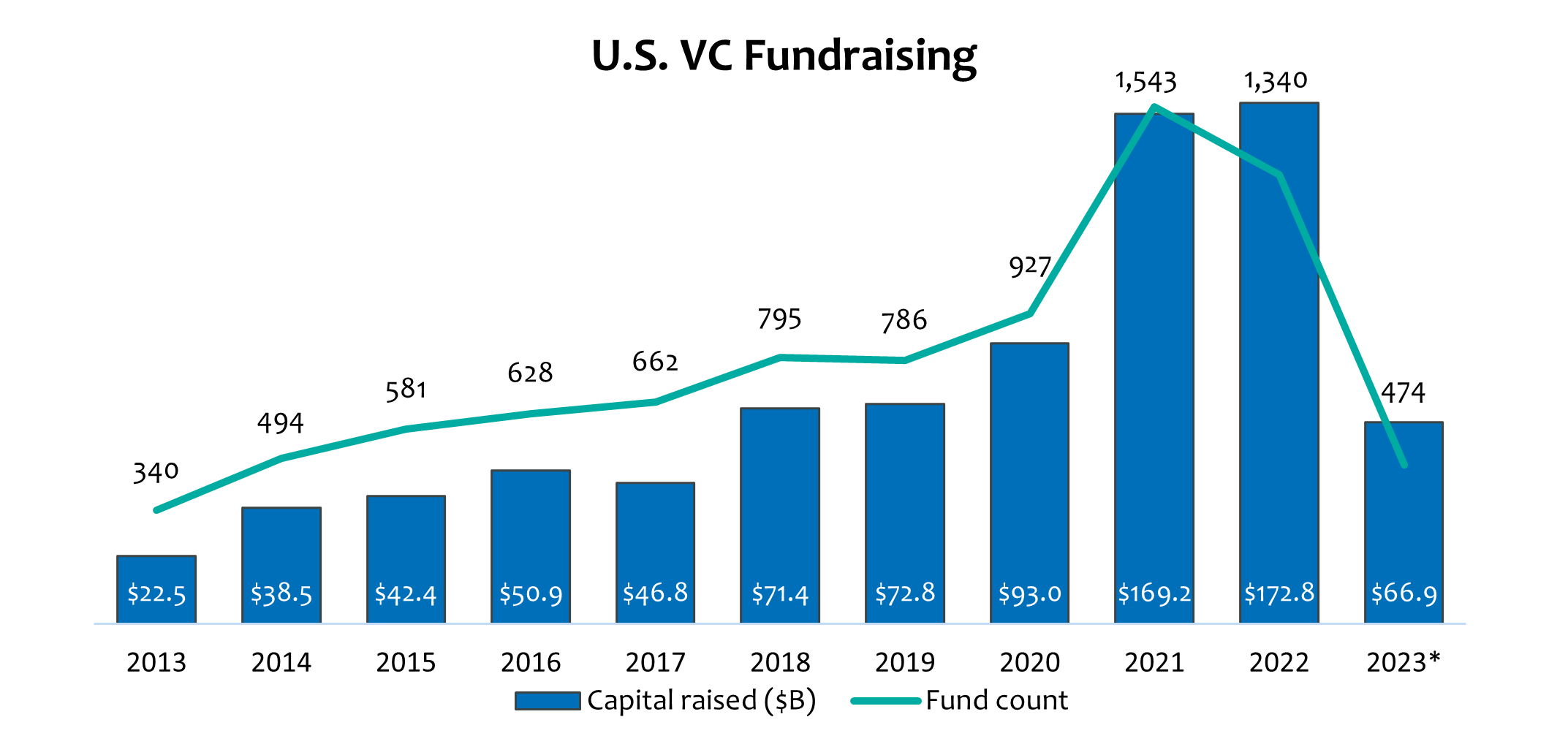
💰 Fundraising & Venture Capital
Raising capital is a critical skill for startup founders. Different stages attract different investors.
Funding Stages
- Bootstrapping: Self-funded from savings, revenue, or early customers. Maintains control, forces discipline.
- Friends & Family: Early capital from personal network ($10k-100k). Flexible terms, but personal risk.
- Angel Investors: High-net-worth individuals investing early ($50k-500k). Often provide mentorship and connections.
- Seed Stage: Formal seed funds, accelerators (Y Combinator, Techstars). $500k-2M, focus on team and idea.
- Series A: Venture capital for proven product-market fit, scaling. $2-15M, focus on revenue and growth.
- Series B/C+: Scaling, international expansion, acquisitions. $15-100M+, focus on market leadership.
Valuation & Term Sheets
- Pre-money Valuation: Company value before investment
- Post-money Valuation: Pre-money + investment
- Dilution: Founders' ownership percentage decreases with each round
- Liquidation Preference: Investors get paid first in exit
- Pro-rata Rights: Right to maintain ownership percentage in future rounds
# Valuation Calculation
Pre-money Valuation = $4M
Investment = $1M
Post-money = $5M
Investor Ownership = $1M / $5M = 20%

# Dilution Example
Founder initial ownership: 100%
Seed round (20% dilution): 80%
Series A (25% dilution): 60%
Series B (20% dilution): 48%

📈 Growth Hacking
Growth hacking is a process of rapid experimentation across marketing channels to identify the most effective, scalable ways to grow. Growth hackers combine marketing, product, and data analysis.
Growth Loops vs Funnels
- Traditional Funnel: Acquisition → Activation → Retention → Revenue → Referral (linear)
- Growth Loop: Self-reinforcing cycles where one output feeds the input (viral loops, paid loops)
Growth Channels
- Viral / Referral: Users invite other users. Dropbox's referral program (free storage) grew 3900%.
- SEO / Content: Organic traffic through valuable content. HubSpot, Canva built through content marketing.
- Paid Acquisition: Facebook/Google Ads, influencer marketing. Must track CAC and LTV.
- Sales-Led: Outbound sales teams for B2B. Salesforce, Zoom built through sales.
- Product-Led Growth (PLG): Product itself drives acquisition. Slack, Zoom, Calendly.
- Community-Led: Building communities that attract users. Developer tools, open source.
# Growth Metrics
CAC = Cost to acquire a customer
LTV = Lifetime value of a customer
LTV:CAC Ratio should be >3:1
Payback Period = CAC / (Monthly Revenue - COGS)

# Viral Coefficient (K)
K = (Number of invites) × (Invite conversion rate)
K > 1 = exponential growth
K < 1 = linear growth
📊 Scaling Operations
Scaling is the process of growing revenue faster than costs while maintaining quality, culture, and customer experience. Most startups fail during scaling — not at launch.
Scaling Challenges
- Hiring: Finding and onboarding the right people quickly. "Hire slow, fire fast."
- Process: Transition from chaos to repeatable systems without bureaucracy.
- Culture: Maintaining values as the organization grows. Culture is defined by what you reward, tolerate, and celebrate.
- Infrastructure: Technology systems that handle 10x growth. Technical debt becomes critical.
- Cash Flow: Managing working capital, inventory, receivables. Growth consumes cash.
Scaling Framework
- Stage 1 (1-10 employees): Founder-led, everyone does everything, no process
- Stage 2 (10-50): First functional roles, basic processes, culture building
- Stage 3 (50-150): Department leaders, formal processes, management layers
- Stage 4 (150+): Professional management, systems, scaling infrastructure
👥 Building the Right Team
The founding team is the single most important factor in startup success. Investors often say they'd rather back an A team with a B idea than a B team with an A idea.
Key Roles
- Hacker (CTO/Technical Founder): Builds product, sets technical vision
- Hustler (CEO/Founder): Sales, fundraising, vision, culture
- Designer (CPO/Product): User experience, product-market fit
Hiring Principles
- Hire for Potential, Not Just Experience: Startups change rapidly; adaptability matters
- Values Over Skills: Skills can be taught; values alignment cannot
- Diversity: Diverse teams outperform homogeneous ones across metrics
- Founder-Market Fit: Founders with deep domain expertise have higher success rates
🚪 Exit Strategies
Exit is how founders and investors realize returns. Planning exit strategy influences business decisions throughout the journey.
Exit Options
- Acquisition: Company is bought by larger company. 80-90% of exits. Strategic buyers pay premium; financial buyers (PE) focus on cash flow.
- Initial Public Offering (IPO): Shares sold on public markets. Highest profile, most complex. Requires scale ($100M+ revenue).
- Merger: Combination with another company to create larger entity. Often creates synergies.
- Secondary Sale: Founders and early investors sell some shares while company continues. Liquidity without full exit.
- Acqui-hire: Acquired primarily for talent, product often discontinued. Typically smaller deals.
Preparing for Exit
- Clean Cap Table: Simple ownership structure attracts buyers
- Audited Financials: Publicly available, clean records
- IP Protection: Patents, trademarks, trade secrets
- Key Employee Retention: Buyers want team to stay
- Revenue Concentration: Diversified customer base reduces risk
# Acquisition Multiples
SaaS companies: 5-10x annual recurring revenue
E-commerce: 1-3x annual revenue
Marketplaces: 3-6x annual revenue
Hardware: 1-2x annual revenue
📊 Startup Metrics & KPIs
- Monthly Recurring Revenue (MRR): Predictable revenue from subscriptions
- Customer Acquisition Cost (CAC): Total sales & marketing spend ÷ new customers
- Lifetime Value (LTV): Average revenue per customer × customer lifespan
- Churn Rate: % of customers lost per period. Good SaaS: <5% annual
- Burn Rate: Net cash spent per month. Runway = Cash / Burn Rate
- Gross Margin: (Revenue - COGS) / Revenue. SaaS: 70-85%
- Net Revenue Retention (NRR): Revenue from existing customers (upsells + cross-sells - churn). >100% is excellent.
🔮 Future of Entrepreneurship
- AI-First Startups: AI integrated into core product, not just feature
- Remote-First: Distributed teams as default, accessing global talent
- Climate Tech: Clean energy, carbon capture, sustainable agriculture
- Health Tech: Digital health, longevity, personalized medicine
- Web3 & Crypto: Decentralized applications, token economics
- Creator Economy: Tools for independent creators and solopreneurs
🎓 Startup Careers
- Founder/Co-founder: Lead vision, fundraising, culture. High risk, high reward. 0-100% equity.
- Early Employee (#1-20): Significant equity (0.5-5%), shape culture, broad responsibilities
- Growth Stage Employee (#20-200): Specialized roles, still meaningful equity (0.1-0.5%)
- Product Manager: Define product, prioritize features, user research ($100-180k + equity)
- Growth Marketer: Experimentation, channels, analytics ($80-150k + equity)
- Sales Lead: Build sales function, acquire customers ($100-200k + commission + equity)
- Engineering Lead: Technical architecture, team building ($120-200k + equity)